Raising Halal Kids: Simple and Fun Ways to Teach Children About Certified Foods 🧑🍳

Teaching children about eating is one of the most important lessons we share. But what do you do when that clear halal certification stamp isn't there? This guide uses simple, fun rules and checklists so your **halal kid** can make smart food choices, even at a friend's house!
Rule 1: If It Has Meat, You Must Ask! 🍗
When you're eating out or at a friend's party, the simplest rule applies to all foods that come from an animal.
Hey Champ, you’re going to a get-together with your friends. Can you eat the chicken pizza or the beef burger there?
Maybe not! Why? Well, we eat a special kind of meat—we call it Halal! This means the animal was taken care of and prepared in a special, kind way.
Action: Any item that contains meat or chicken (like pizza, burgers, pepperoni, or chicken nuggets), please always ask an adult, "Is this meat halal?" If they aren't sure, it's safer to just skip it and choose a veggie option!
This rule handles all primary non-halal meat concerns directly and clearly.
Rule 2: The Sneaky Snack Checklist (Candies & Ice Cream) 🍬
It's often hard to find a Halal certification on fun treats like bakery items, ice creams, chocolates, and candies. This is where we teach our kids to be label detectives!
🔍 Look Out for Gelatin
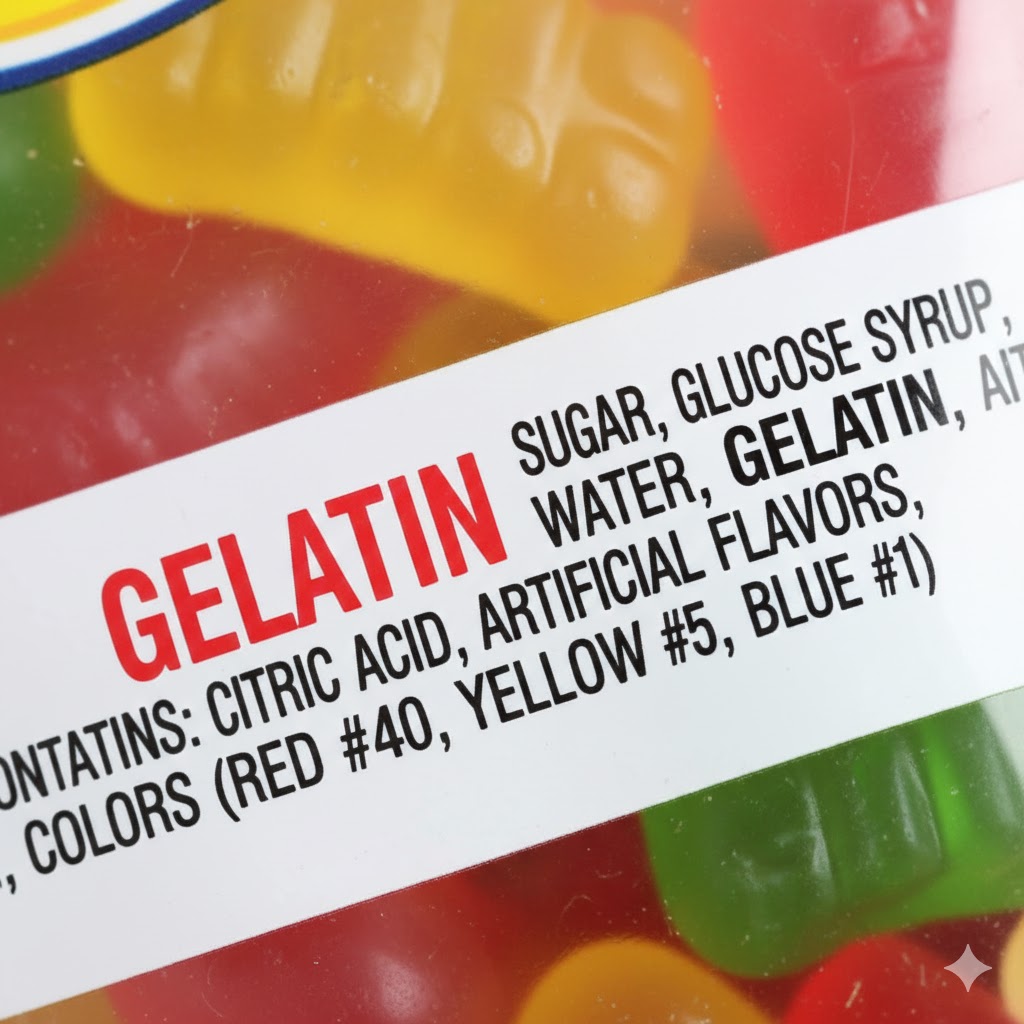
Gelatin is the #1 tricky ingredient found in many gummy candies, marshmallows, and sometimes even in cake frosting or medicinal capsules. Most gelatin comes from non-halal sources.
Hey Mom/Dad, can I eat this gummy bear candy?
Action: Let's quick-check the label together! Turn it around and look for the word "Gelatin."If you see it, sadly, we have to put it back. NO Gelatin = Safe to Eat!
🍸 Look Out for Alcohol
Small amounts of alcohol can sneak into items like chocolate fillings, flavor extracts (especially vanilla), or sauces. If the label mentions any kind of liquor, rum, or a high-percentage extract, ask an adult.
Rule 3: The "Dicy" Word to Remember (Fats & Emulsifiers) ❓
This ingredient is the hardest for kids (and many adults!) but is common in cookies, bread, and chocolate. It helps ingredients stick together, but it can come from animal or plant fat.
The Word: Mono- and Diglycerides
If you see this on the label (and the product doesn't have a clear Halal or Vegetarian stamp), it's a yellow light!
Hey, this chocolate looks good! Wait, it says 'Mono- and Diglycerides.' What do I do?
Action: If you see this long word, you need one more word to feel safe: "Vegetable or "Plant-Based." If the label says Vegetable Mono- and Diglycerides, it’s safe! If it just says the long word, we need to find a snack we are 100% sure about.